There's a moment in every major industrial shift when the scale of ambition stops feeling unrealistic and starts feeling inevitable. With coal, it happened when the railways made bulk transport possible. With oil, it happened when internal combustion engines needed feeding at volume. With renewables, it happened when solar costs fell so far that even the sceptics stopped arguing.
Hydrogen is approaching that moment. And the signal isn't a scientific paper or a government whitepaper. It's the megaprojects.
Across the Middle East, Australia, Northern Europe, and North America, hydrogen projects are being announced and built at a scale that would have seemed absurd five years ago. Gigawatt-scale electrolysers. Dedicated export terminals. Pipeline infrastructure spanning hundreds of kilometres. These aren't demonstration plants they're industrial facilities designed to produce hydrogen at the volumes that global decarbonisation actually requires.
At Hydrogen Transition Energy (HTE), we pay close attention to what these projects tell us. Not just about technology, but about where the energy system is genuinely heading.
What Makes a Hydrogen Project a "Megaproject"?
Size, mostly but not just size.
A hydrogen megaproject typically involves electrolyser capacity in the hundreds of megawatts to multiple gigawatts, dedicated renewable energy generation to power production, export or distribution infrastructure built specifically for hydrogen, and offtake agreements with industrial or government buyers locking in demand over long periods.
What separates them from smaller projects isn't just the numbers. It's the commitment. Megaprojects require years of planning, billions in capital, and coordination between governments, private developers, utilities, and industrial end-users. When that alignment happens, it signals something real that the parties involved genuinely believe hydrogen demand will be there in the volumes required to justify the investment.
That's a different signal than a pilot plant.
Where the Big Projects Are Happening
Australia has emerged as one of the most significant green hydrogen development regions on the planet. The country has the land, the sunshine, the wind resources, and crucially the proximity to energy-hungry markets in Japan and South Korea. Projects like the Asian Renewable Energy Hub in Western Australia, targeting over 26 gigawatts of combined wind and solar to produce green hydrogen and ammonia for export, represent the kind of ambition that reshapes global energy trade.
Saudi Arabia's NEOM project is building a $8.4 billion green hydrogen facility at Oxagon designed to produce 600 tonnes of green hydrogen daily using 4 gigawatts of dedicated wind and solar. The hydrogen gets converted to ammonia for shipping, then reconverted at the destination. The logistics are complex. The scale is extraordinary.
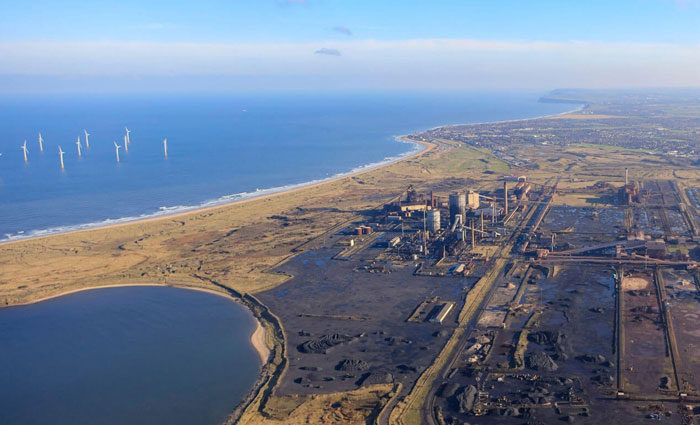
Northern Europe is racing to build import infrastructure. Germany, the Netherlands, and the UK are investing heavily in port facilities, pipeline retrofits, and storage capacity to receive hydrogen from production regions and distribute it to industrial users. The North Sea is also emerging as a serious offshore wind and hydrogen production zone in its own right.
Chile and Namibia are positioning themselves as future hydrogen export nations both have exceptional renewable resources and are actively courting international investment to develop green hydrogen industries that could reshape their economies.
The geography of hydrogen is becoming a real thing. Producing countries. Consuming countries. Transit routes. It's starting to look like the oil and gas trade, except cleaner.
Why Scale Actually Matters Here
There's a reason the industry is chasing megaprojects rather than just multiplying smaller ones.
Green hydrogen production costs are still higher than fossil-derived alternatives in most markets. The primary lever for bringing those costs down aside from cheaper renewable electricity is electrolyser manufacturing scale. The more electrolysers get built, the cheaper they get to make. The cheaper they get to make, the more projects become financially viable. The more projects that run, the more operational data drives further improvement.
Megaprojects accelerate that entire cycle. A 1 gigawatt electrolyser order does more for manufacturing cost reduction than fifty 20 megawatt projects combined. The hydrogen industry needs volume to unlock the cost trajectory that solar and wind achieved, and megaprojects are how that volume materialises.
This isn't theory. It's the same dynamic that drove solar panel costs down 90% over a decade.
The Infrastructure Gap Nobody Talks About Enough
Here's the honest part. Producing hydrogen at scale is one challenge. Getting it to where it's needed is another one entirely, and it gets less attention than it deserves.
Hydrogen is the smallest molecule in existence. It leaks through materials that contain every other gas just fine. It causes embrittlement in certain steels. Liquefying it for transport requires cooling to minus 253 degrees Celsius. These aren't unsolvable problems industry has been handling hydrogen safely for over a century but building the infrastructure to move green hydrogen at the volumes megaprojects will produce requires serious investment and serious engineering.
Ammonia conversion, liquid organic hydrogen carriers, and direct pipeline transport are all being developed and deployed as solutions. None of them are perfect yet. All of them are improving. And the megaprojects themselves are part of what's driving that improvement because when you're producing hydrogen at that scale, you have to solve the transport question or the whole investment falls apart.
What This Means for the UK
The UK isn't going to be a major hydrogen export nation. It doesn't have the land area or solar resource for that. But it has significant offshore wind capacity, a large industrial base with genuine hydrogen demand, existing pipeline infrastructure that could be adapted, and ports that could serve as import hubs for hydrogen produced elsewhere.
The government has set targets 10 gigawatts of low-carbon hydrogen production capacity by 2030, split between electrolytic and carbon capture-based production. Whether those targets get hit on schedule is an open question. What's less open is the direction. The industrial clusters in Teesside, Humber, Merseyside, and South Wales are all actively developing hydrogen projects. The pieces are moving.
At Hydrogen Transition Energy (HTE), we work within this landscape every day helping businesses and developers understand where the real opportunities sit, what the genuine risks are, and how to build projects that survive contact with commercial reality.
Conclusion
Hydrogen megaprojects are not a distant promise. They are under construction, signing contracts, and moving product right now. The energy system is shifting toward hydrogen at a pace and scale that the industry's critics didn't anticipate — and the investment flowing into these projects reflects genuine commercial conviction, not just optimism. At Hydrogen Transition Energy (HTE), we believe the UK has a real role to play in this global transition as a producer, an importer, and an industrial adopter of clean hydrogen. The megaproject era has started. The question for every energy-intensive business is what position they want to hold when it matures.
FAQ
What is a hydrogen megaproject exactly?
There's no official definition, but in practice it means hydrogen production facilities operating at hundreds of megawatts to multiple gigawatts of electrolyser capacity, typically paired with dedicated renewable energy generation and export or distribution infrastructure. The distinguishing factor is that they're built for commercial-scale supply, not demonstration.
Are these projects actually going ahead or just announcements?
Both, honestly. Some announced projects have stalled due to financing gaps, policy uncertainty, or offtake challenges. Others are under construction or already operating. The gap between announcement and delivery is a real issue in the industry which is why we look closely at which projects have signed offtake agreements and secured financing before drawing conclusions about their significance.
Why does the UK need to import hydrogen if it's building its own production?
Domestic production and imports aren't mutually exclusive. The UK's renewable resource primarily offshore wind is valuable but limited relative to industrial hydrogen demand. Importing green hydrogen from regions with cheaper renewable electricity will likely be more cost-effective for certain applications, particularly in the 2030s when import infrastructure matures. It's the same logic as importing food while also having a domestic farming sector.
How does hydrogen transport work at megaproject scale?
Mainly through ammonia conversion for long-distance shipping, compressed gas pipelines for regional distribution, and increasingly liquid organic hydrogen carriers for certain routes. Each method has cost and efficiency trade-offs depending on distance, volume, and end-use application.
How does HTE engage with megaproject development?
We work with developers, industrial offtakers, and investors at the project development stage helping structure the hydrogen supply chain, assess technology options, and navigate the UK regulatory environment. If you're involved in a project at any stage of development, we're worth talking to early.