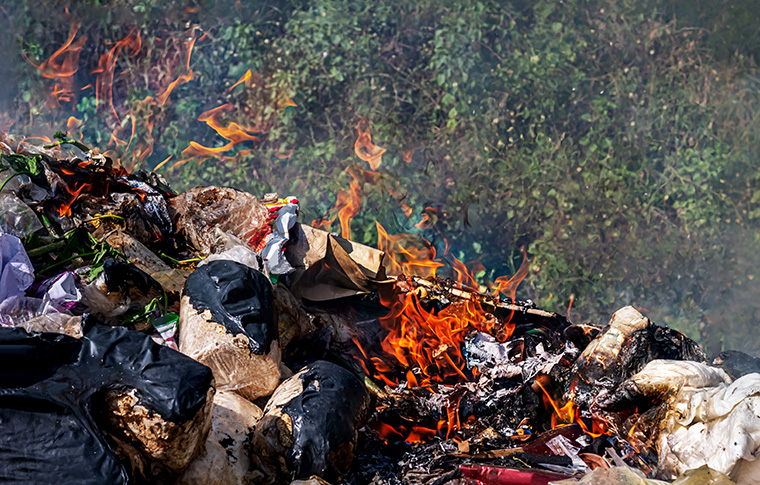
All that waste most of it non-recyclable, most of it just sitting there still contains energy. Locked inside old plastics, mixed rubbish, synthetic textiles, is carbon and hydrogen that took real resources to produce. And we're just burying it. Or burning it and calling that a solution.
At the same time, industries across the UK are paying a fortune for fossil fuels they know they need to replace. Steel plants. Freight operators. Chemical manufacturers. They need clean energy at a scale that batteries can't touch and the grid can't reliably deliver. They need hydrogen but affordable, low-carbon hydrogen at commercial volumes isn't easy to come by.
So here's the question that drives everything we do at Hydrogen Transition Energy: what if the waste already in the system is part of the answer?
The Basic Idea And Why It Works
Waste-to-hydrogen isn't magic. It's chemistry that's been understood for a long time, applied in a smarter direction.
Non-recyclable waste gets fed into a high-temperature conversion system gasification is the most common method. Extreme heat, carefully controlled conditions, and the molecular bonds holding that waste together start to break. What comes out is a synthetic gas called syngas. From there, the hydrogen gets separated, cleaned up, and compressed into usable fuel.
What doesn't come out? The landfill gas. The methane quietly seeping into the atmosphere from buried waste. The CO₂ pouring out of an incinerator stack.
You're capturing energy that would otherwise become pollution. That's not a small thing.
The Waste Problem Nobody Wants to Talk About Honestly
We recycle more than we used to. Good. But there's a stubborn category of waste contaminated packaging, composite materials, certain plastics that recycling simply can't handle. It's not going away. It's going to keep being generated in enormous volumes regardless of how many bins we sort into.
In the UK alone, millions of tonnes of this residual waste end up landfilled or incinerated every year. Landfill produces methane. Methane is, over a 20-year period, far more damaging to the climate than CO₂. Incineration does recover some energy, but the emissions record is patchy and the process wastes a significant chunk of the hydrogen content sitting right there in the feedstock.
Waste-to-hydrogen pulls that material out of both bad options and turns it into something genuinely useful. The waste stream becomes a supply chain. That shift in thinking from disposal problem to energy resource is what makes this technology worth taking seriously.
This Isn't a Lab Project Anymore
I want to be clear on this because the scepticism is understandable. Hydrogen has been "nearly there" for years. People are tired of pilot projects that go nowhere.
Waste-to-hydrogen is different because it builds on industrial processes gasification, syngas cleaning, hydrogen compression that have been running commercially for decades. The innovation is in how those processes get combined and optimised for hydrogen output. It's engineering refinement, not a moonshot.
Projects are running now. In the UK and across Europe, waste-to-hydrogen facilities are producing real hydrogen, feeding real industrial users, and processing real residual waste that would otherwise have cost money to dispose of. The economics aren't perfect everywhere yet they rarely are in an early market but the operational proof is there.
Where Hydrogen Transition Energy Fits In
At HTE, we focus on the practical side of this. Not the concept the delivery.
That means working with industrial operators to evaluate their waste streams, model the hydrogen output, and figure out whether a project makes financial sense before anyone commits serious capital. It means understanding local planning, grid connection, offtake agreements, and the dozen other things that determine whether a good idea actually gets built.
The UK has a real opportunity here. The waste resource exists. The industrial hydrogen demand exists. The policy environment, with net zero commitments and government hydrogen targets, is pointing in the right direction. What's needed is people willing to do the detailed work of connecting those things and that's precisely what we're here for.
Conclusion
The sustainable future everyone talks about isn't going to arrive through one breakthrough technology. It's going to be built piece by piece and waste-to-hydrogen is one of the more useful pieces we have. It doesn't just produce clean energy. It fixes something broken about how we handle waste at the same time. At Hydrogen Transition Energy, that's the kind of progress we're interested in practical, deployable, and long overdue.
FAQ
What waste actually works as a feedstock?
Non-recyclable plastics, mixed municipal solid waste, commercial and industrial residuals, and some biomass materials all convert well. Higher calorific content generally means better hydrogen yields. Every waste stream is a bit different, which is why we assess each project individually rather than giving blanket answers.
How low-carbon is waste-derived hydrogen really?
Significantly lower than grey hydrogen from natural gas, and in many cases competitive with blue hydrogen even before carbon capture is factored in. When renewable electricity powers the process, the carbon intensity drops further. The exact figure depends on the waste composition and the energy source used we model this specifically for each project.
Isn't incineration with energy recovery basically the same thing?
Not really. Incineration captures heat and generates electricity at fairly modest efficiency. Waste-to-hydrogen extracts the hydrogen content specifically, which has a much higher energy value per unit and produces a fuel that displaces fossil fuels directly in hard-to-decarbonise sectors. The emissions profile is also better. They're not the same process or the same outcome.
Is this technology actually ready to deploy?
Yes. Gasification is a mature technology. The integration for hydrogen production is newer but proven at commercial scale in multiple operating facilities. We wouldn't be building a business around it if the answer were otherwise.
How do we find out if this works for our organisation?
Talk to us. We'll look at your waste volumes, your location, your energy costs, and give you a straight view on whether waste-to-hydrogen makes sense. No obligation, no sales pitch dressed up as a feasibility study.